
Healthcare organizations often approach data governance as a regulatory necessity.
Policies are documented.
Controls are defined.
Committees are established.
Yet governance frequently operates at the margins of strategy.
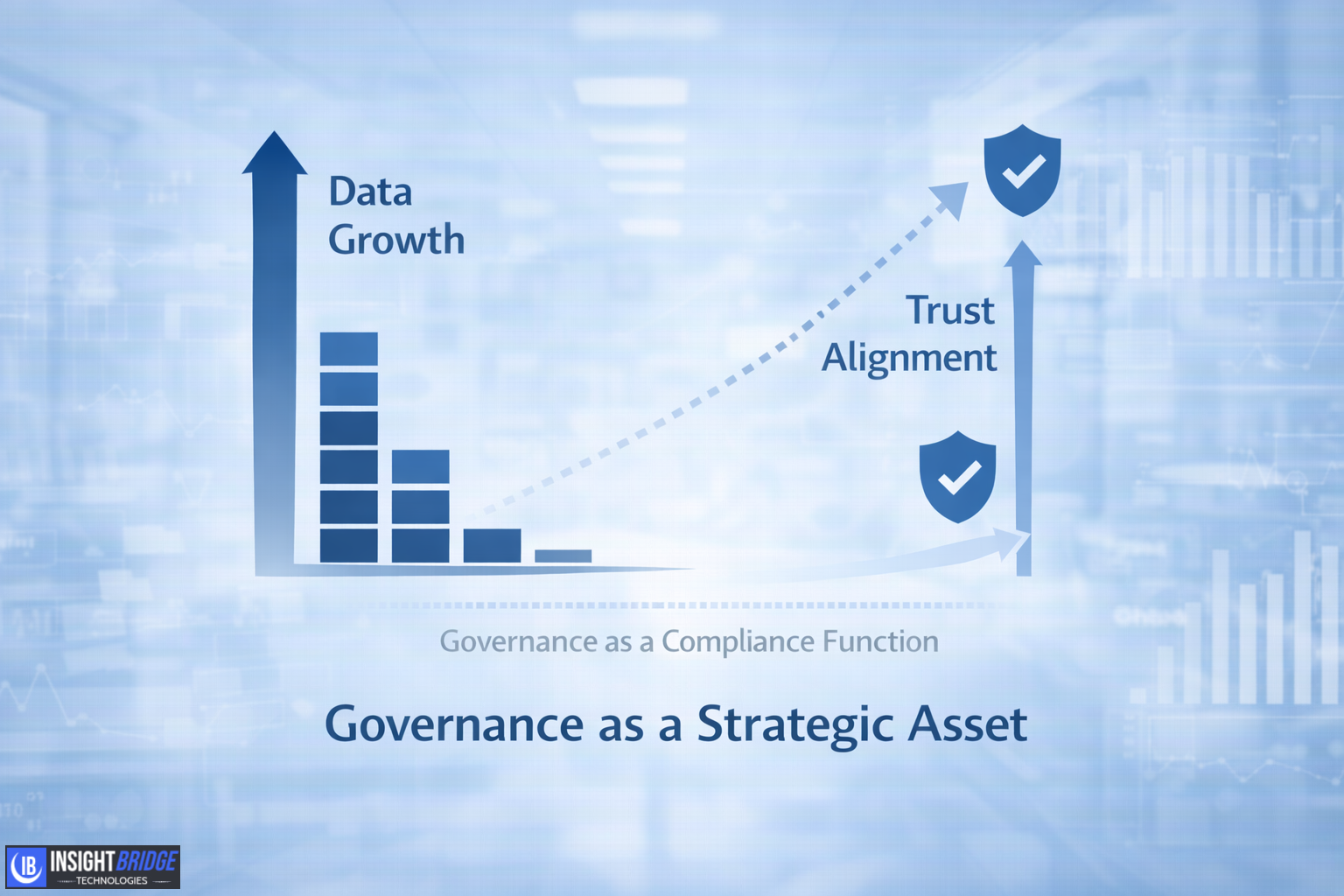
When treated purely as compliance, data governance limits risk — but rarely creates value.
The Misunderstanding
Many organizations assume governance exists to:
- Enforce standards
- Prevent misuse
- Satisfy regulatory expectations
These are important outcomes.
But they are secondary.
The primary purpose of governance is to enable trusted decision-making at scale.
Why Governance Matters More Now
Modern healthcare environments depend on:
- Enterprise imaging platforms
- AI-enabled analytics
- Cloud data ecosystems
- Cross-system interoperability
Without governance:
- Data definitions diverge
- Reporting loses credibility
- AI models inherit inconsistency
- Operational decisions fragment
Technology accelerates complexity faster than organizations align data.
Governance as an Enabler
High-performing organizations treat governance as infrastructure.
They:
- Define ownership of critical data domains
- Establish shared semantic standards
- Align governance with operational workflows
- Embed accountability into decision structures
Governance becomes invisible when it works — because trust becomes assumed.
The InsightBridge Perspective
We often see organizations invest heavily in platforms while governance maturity lags behind.
The result is predictable:
More data.
Less clarity.
Technology expands capability.
Governance determines usefulness.
Leadership Takeaway
Data volume is no longer the constraint.
Trust is.
Organizations that treat governance as strategy — not compliance — unlock the full value of digital transformation.