
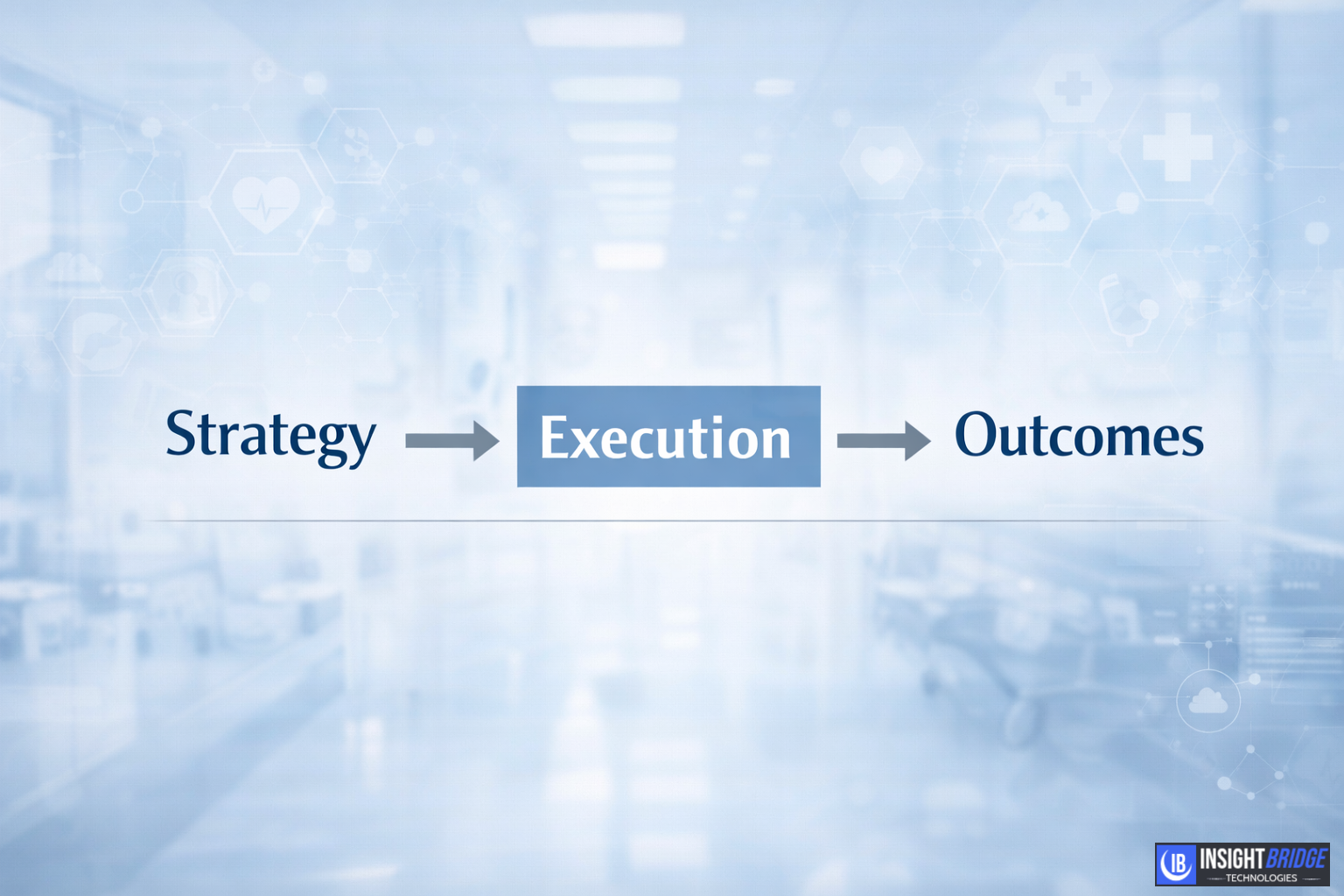
Most transformation initiatives don’t fail at the beginning.
There’s energy.
Alignment.
Executive sponsorship.
They don’t fail at the end either.
By the time failure becomes visible, momentum has already been lost.
Transformation fails during execution.
The Execution Phase
Execution is where:
- Initial urgency fades
- Competing priorities return
- Governance forums become routine
- Metrics appear stable, but progress slows
The organization isn’t in crisis.
It’s drifting.
Why Execution Is So Hard
Early stages are fueled by vision.
Late stages are judged by outcomes.
Execution requires:
- Discipline without excitement
- Accountability without applause
- Consistency without visibility
This is where leadership maturity matters most.
What Strong Organizations Do Differently
They treat execution as the most critical phase.
They:
- Reaffirm executive sponsorship regularly
- Track adoption depth — not just milestone completion
- Surface friction early instead of masking it
- Protect transformation initiatives from priority erosion
They don’t assume momentum will sustain itself.
The InsightBridge Perspective
Organizations are often capable of launching transformation.
Sustaining it through execution is what separates aspiration from operational impact.
Leadership Takeaway
The beginning is exciting.
The end is measurable.
Execution determines everything.